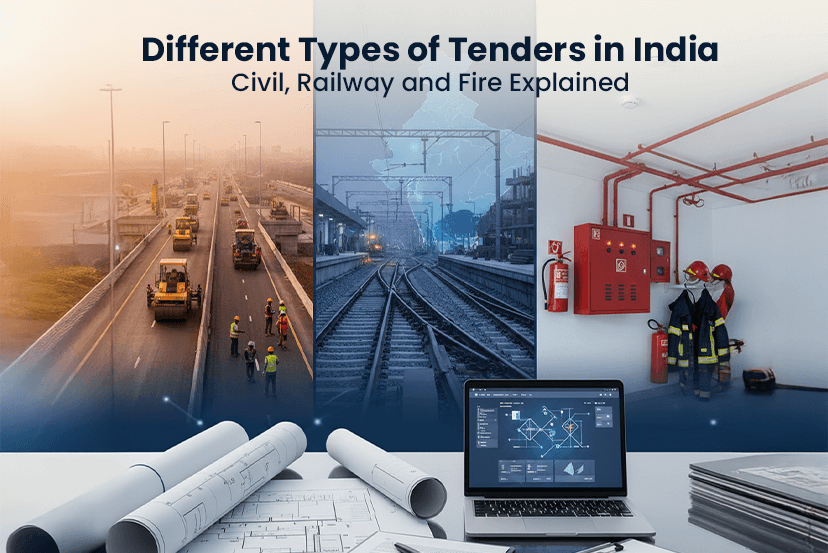
Do you want to participate in government projects in India? Then, one of the first things that you must know to understand is the types of tenders in India. Many new businesses or MSMEs directly jump into bidding, which leads to rejections. This happened because you bid on inappropriate areas, which can leads understanding the structure, and later face rejection, financial loss, or technical disqualification.
In India, most public tenders are published online via the Government e-Marketplace (GeM), sector specific platform like the Indian Railways E-Procurement System (IREPS) for railway projects. We have covered everything about types of tenders in civil engineering, railway, and fire specifically. So without further delay, lets get into it.
How Does Tenders Work?
Tender process usually follows these common steps-
- The department publishes a Notice Inviting Tender (NIT).
- Interested bidders download documents.
- They submit technical and financial bids.
- The authority evaluates eligibility and pricing.
- The contract is awarded to the selected bidder.
Nowadays, most governments tenders follow a two bid system:
- Technical Bid (qualification and documents)
- Financial Bid (price quotation)
Learn More about: How to Prepare Financial and Technical Bids in Tendering: Easy Guide | TenderShark
If your technical bid fails, your financial bid will not even be opened. That is the reason understanding the type of tender is very important.
Types of Tenders in India (Based on Procurement Method)
Before learning about the sector wise tenders, lets understand the general categories included in etenders:
1. Open Tender (Public Tender)
This is the most common type of tender in India. Anyone who meets the eligibility criteria can participate, which is the reason it is widely used for:
- Road construction
- Government buildings
- Public supply contracts
- Infrastructure projects
Open tenders promote transparency and allow maximum competition.
Problem: Because it is open to all, competition is very high. Many bidders quote extremely low prices, making it difficult to win.
Solution: Instead of blindly quoting the lowest rate:
- Focus on cost efficiency
- Study competitor pricing trends
- Strengthen your technical proposal
- Build a strong past project portfolio
Winning is not always about the lowest price, its about being technically strong and commercially sensible.
2. Limited Tender
In this tender, invitations are sent only to selected or pre-qualified contractors. This is used when:
- Work requires specialization
- Time is limited
- Only experienced vendors are suitable
Problem: New contractors feel they don’t get opportunities here.
Solution: Start with small open tenders. Build experience. Once you complete 2- 3 government projects successfully, departments may include you in limited tenders.
3. Single / Negotiated Tender
In this, the department negotiates directly with one vendor. This happens in:
- Emergency works
- Proprietary equipment supply
- Specialized defense or railway components
For example, if a railway signal system uses a patented technology, only one approved supplier may be invited.
4. Two-Stage Tender
This is extremely common in civil and railway projects.
Stage 1: Technical Evaluation
Stage 2: Financial Evaluation
Only technically qualified bidders move ahead.
Why This Matters: Many bidders focus only on pricing and ignore technical documentation. That leads to rejection before financial evaluation.
Types of Tender in Civil Engineering
Civil engineering generates the highest number of public tenders in India. If you are a contractor, understanding the types of tenders in civil engineering is essential. Civil tenders are usually related to construction and infrastructure development. It includes specific tenders, including-
1. Building Construction Tenders
| Building Construction Tenders Includes | Project Requirements |
| Government offices | Structural drawings |
| Schools and colleges | Material specifications |
| Hospitals | Quality control compliance |
| Residential quarters |
Problem: Strict eligibility like turnover requirements and similar project experience.
Solution: Documentation discipline is a crucial step in civil tender success. Always maintain a record of:
- Completion certificates
- Client feedback letters
- Financial audit reports
2. Road and Highway Tenders
These tenders issued by state PWD departments and national authorities. These include:
- Highway construction
- Road widening
- Flyover construction
- Drainage systems
Such tenders are usually high-value and technically detailed.
Concern: Heavy machinery requirements and high EMD (Earnest Money Deposit).
Solution: If capital is limited, consider:
- Joint ventures
- Subcontracting partnerships
- Equipment leasing instead of purchasing
Read more about: Difference Between EMD and Bid Security: Understanding the Process, Meaning, and Payment | TenderShark
3. Bridge and Large Infrastructure Tenders
These projects require highly experienced contractors and their projects involve:
- Bridges
- Metro corridors
- Tunnels
- Industrial infrastructure
4. Water and Sewerage Tenders
These tender project Includes:
- Water pipeline laying
- Sewage treatment plants
- Drainage projects
With India focusing on urban development, these tenders are increasing rapidly.
Types of Tender in Railway
Railway tenders are highly structured and technical. They are primarily issued by Indian Railways, one of the largest railway networks. Railway projects are published on the Indian Railways E-Procurement System (IREPS). The following are the main categories in rail tenders-
| Types of Tenders In Railway | What it Includes- | Requirements |
| Track Construction and Maintenance | New railway linesTrack renewalBallast supply | These tenders require experience in railway-grade standards. |
| Signalling and Telecom Tenders | Railway signalsCommunication systemsElectronic interlocking | This category requires technical certifications. |
| Electrification Tenders | Overhead equipment installationRailway substationsPower supply works | Railway electrification has expanded significantly in recent years, increasing tender opportunities. |
| Rolling Stock Procurement | CoachesWagonsLocomotive components | These are usually manufacturing or supply tenders. |
Railway Tender Challenges
Problem 1: Portal Complexity
Beginners found the IREPS registration and DSC setup confusing.
Solution:
- Obtain a valid Class-3 Digital Signature Certificate
- Complete vendor registration carefully
- Read the tender manuals available on the portal
Problem 2: Strict Technical Compliance
Even in minor specification mismatches, railways reject bids.
Solution: Always:
- Match every clause with a compliance statement
- Avoid assumptions
- Attend pre-bid meetings
Types of Fire Tenders
Mostly, people search for types of fire tenders that refer to the firefighting vehicles procured through government tenders. In this, specifications usually include proper safety standards and guidelines issued by authorities like the Ministry of Home Affairs.
Fire tenders are released for:
- Municipal corporations
- Airports
- Industrial zones
- Defense establishments
Common Types of Fire Tenders
1. Water Tender: These tenders are required to carry large water tanks for general firefighting.
2. Foam Tender: It is used in chemical plants and oil refineries.
3. Crash Fire Tender (CFT): This need for high speed vehicles used at airports for aircraft emergencies.
4. Dry Chemical Powder (DCP) Tender: This tender is commonly used for electrical and chemical fires.
5. Multipurpose Fire Tender: This combines water, foam, and rescue tools.
Fire Tender Bidding Challenges
Problem: Many people find technical specifications complicated. Also, each vehicle must meet performance standards.
Solution: Work closely with certified manufacturers and ensure compliance documents match specifications exactly.
Final Words
In conclusion, understanding the different types of tenders in India is not just for knowledge; it is a business skill. Whether you are exploring or bidding for any of the following tenders like railway projects, fire safety, or construction projects. Moreover, you can find all these tenders available at TenderShark and explore the latest active tenders in India.