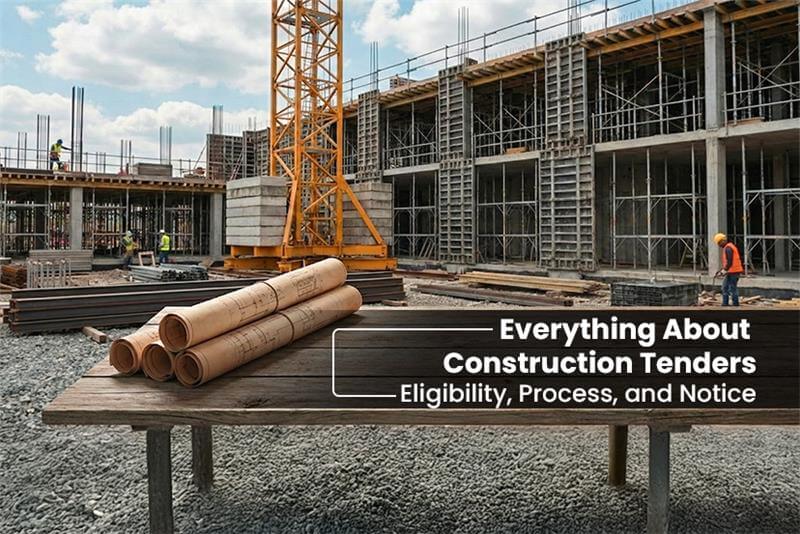
From building roads and bridges to house projects and public infrastructure, everything covers construction work. Being in the construction business, everyone wants to work with the government authorities. As India’s construction Industry is growing rapidly with projects from central and state governments, PSUs, railways, highways, smart cities, and more. Every day, many construction tenders are published, but many contractors fail to participate due to less knowledge of the process, documents, and other basic details. So if you are also facing something like this, then you are not alone!
In this guide, we have made this complicated process much easier than ever. You will get to know about construction tender work, eligibility, process, tender documents, and common mistakes to avoid. To learn everything in detail, read now!
What Is a Construction Tender?
Construction tender is the formal process where the project owner (Client) invites interested businesses or contractors to submit bids for the construction project. Each bidder provides-
>> Technical details
>> Pricing
>> Timeliness
>> Qualifications
>> Experience
Based on these details, the project owner evaluates bids and awards the contract to the most suitable bidder.
Why Construction Tenders Are Important
Here is why these construction tenders are important:
- These are government construction tenders that ensure transparency and fair competition.
- Help project owners get the best value for money.
- Provide contractors or bidders with equal opportunity to participate and win the project.
To learn benefits and challenges read out this: E-Tendering in the Construction Industry: Benefits and Challenges
What Is Tendering in Construction?
Tendering in construction is the complete procurement process that is used to choose the contractor for a project. It starts from issuing a tender notice and ends with awarding the contract.
Tendering allows:
>> Clear project scope
>> Competitive pricing
>> Qualified contractors only.
>> Legal and financial safety for both parties.
What are the Different Types of Construction Tenders?
These are the common types of construction tenders available. Knowing each one will help the bidder to select the right opportunities:
Open Tender
These tenders are open to all eligible individuals or businesses. It is usually advertised on official e-tender portals and newspapers. An open tender is common in government projects.
Best For: New and experienced contractors.
Limited Tender (Selective)
On limited tenders, only pre-qualified or invited bidders can participate, and usually less competition.
Best for: Experienced contractors with strong track records.
Negotiated Tender
In this, the project owner (client) directly negotiated with one contractor and dealt with them. It is commonly used for urgent or specialized projects.
Two-Stage Tender
This particular tender, includes two stages:
>> First stage: Technical proposal.
>> Second stage: Financial proposal.
Framework Tender
These tender types involve long term agreements for repeated work over a period.
What Is a Tender Notice (NIT)?
Tender notice or Notice Inviting Tender (NIT) is the official announcement of the construction project available for bidding. This notice informs bidders about-
>> Project details
>> Eligibility criteria
>> Submission deadlines.
Where Are Tender Notices Published?
These tender notices are usually published on:
>> Government e-tender portals.
>> Department websites.
>> Newspapers
>> Authorized tender platform.
Note: You can also check out the active tenders listed on the third-party websites, like TenderShark. But always choose a trusted platform.
Key Contents of a Tender Notice
- Tender ID / Reference number
- Name and scope of work
- Estimated project value
- Eligibility requirements
- Tender fee and EMD details
- Bid submission deadline
- Bid opening date
- Contact details
Common Requirements for Government construction projects
Before moving ahead to bid, contractors must meet the specific eligibility criteria that is mentioned in the tender notice.
Experience
Contractors or potential bidders must have the experience of completing a similar project or have a minimum of years of expertise in the construction field.
Financial Capacity
The bidder must have the specific annual turnover and bank solvency or net worth. Usually, the required financial capacity is mentioned in the tender notice.
Legal and Registration Documents
Your business or company must be registered, have GST registration, and a PAN card.
Technical Qualifications
Constructions, skilled manpower, and machinery and equipment.
Compliance and certifications
Safety standards and quality certifications (if required)
Note: Always check the eligibility carefully to avoid rejection.
How to Participate for Construction Tender Process: Step-by-Step
Here are the steps that will help you to participate in the government construction tender process:
Step 1: Tender Notice Publication
The tender notice is published by the client over the official e-tender portal; it includes the complete project details.
Step 2: Download Tender Documents
Bidders should download:
- Tender document
- Drawings
- Specifications
- Bill of Quantities (BoQ)
Step 3: Meeting (Before Bid)
In this meeting, bidders can ask questions or address any confusion and get clarifications before submission.
Step 4: Prepare the Bid
>> Technical bid: Prepare the bid by mentioning your experience, methodology, and documents.
>> Financial bid: Mention your pricing and cost breakdown in the document completely.
Step 5: Bid Submission
Now submit the bid online or offline before the deadline. However, online e-tendering has a simpler process compared to offline.
Step 6: Bid Opening and Evaluation
- Technical bids are evaluated first.
- Financial bids opened for qualified bidders.
Step 7: Award of Contract
The lowest or most suitable bidder receives the Letter of Award (LOA).
Step 8: Contract Signing
The final agreement is signed, and work begins.
Important Documents Required for Construction Tenders
Most construction tenders require the following documents:
- Tender application form
- Company registration certificates
- Experience certificates
- Financial statements
- Bill of Quantities (BoQ)
- Technical proposal
- Earnest Money Deposit (EMD)
- Power of attorney
Effective Tips: Prepare a Strong Construction Tender Bid
To improve your chances of winning the construction project, you can prepare a bid by considering things:
- Read the tender document carefully.
- Follow submission instructions.
- Meet all eligibility conditions.
- Provide accurate pricing
- Avoid unrealistic low bids.
- Submit before the deadline.
Common Mistakes to Avoid in Construction Tenders
Most bidders make these mistakes while submitting the bid for construction tenders:
- Ignoring eligibility requirements
- Missing documents
- Incorrect pricing in the BoQ
- Late submission
- Not attending pre-bid meetings.
To win the construction tender contract and get to work with a government project, you can avoid these mistakes and increase your chances of winning the construction contract.
Final Thoughts
Finding the construction tender is easier now online. You can simply make your visit to official sites, or third-party sites that list the latest tenders like, like TenderShark. Construction tenders offer opportunities for contractors and suppliers, but only if you understand the eligibility criteria, tender notice, and tendering process completely. So, in this blog, we have covered everything that you should know about construction tenders. For more such updates, stay connected with us!